

Put Pauline Machado
Maintaining the quality of life for dogs and cats goes far beyond proper nutrition and regular visits to the veterinarian. Just as for us, regular physical activity is an essential pillar for the physical and mental well-being of pets, helping to prevent diseases, improve behavior, and further strengthen the bond with their families.
To explain in detail the importance of physical activity not only for dogs, but also for kittens, we spoke with the Veterinarian, Marcela Squillaro Rubo Spadoni, Nutritionist, physiatrist, and postgraduate in physiotherapy and animal rehabilitation.
Watch the interview and share it with your friends and family so that more people can access accurate information about how physical exercise influences the health of dogs and cats at all stages of life. After all, just like us, animals also need to move to live better!
Enjoy your reading!

Pet Med – To begin, please explain what we mean by quality of life for pets, specifically for dogs and cats.
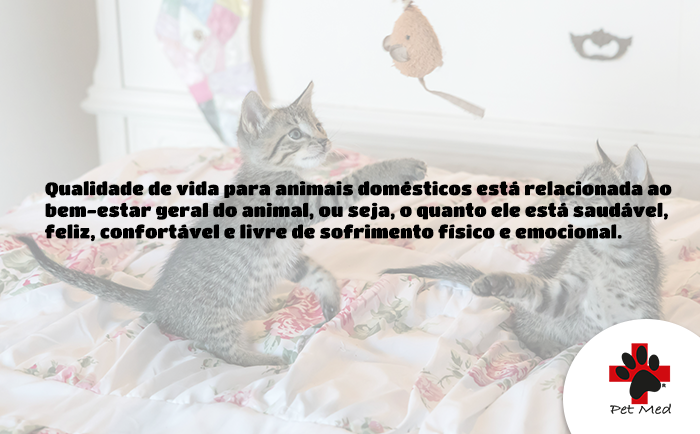
Marcela Squillaro Rubo Spadoni – Quality of life for pets is related to the animal's overall well-being, that is, how healthy, happy, comfortable, and free from physical and emotional suffering it is. I will detail some examples:
Regular veterinary care, such as vaccinations, deworming, routine checkups, proper and balanced nutrition, physical exercise, among others, are linked to physical health.
An environment free from stress, fear, or anxiety, that provides mental stimulation such as toys, activities, interactions, and companionship, is linked to health and emotional well-being, as is living in a clean, safe, and comfortable space with adequate temperature and lighting, and areas for rest, feeding, and hygiene, such as litter boxes for cats.
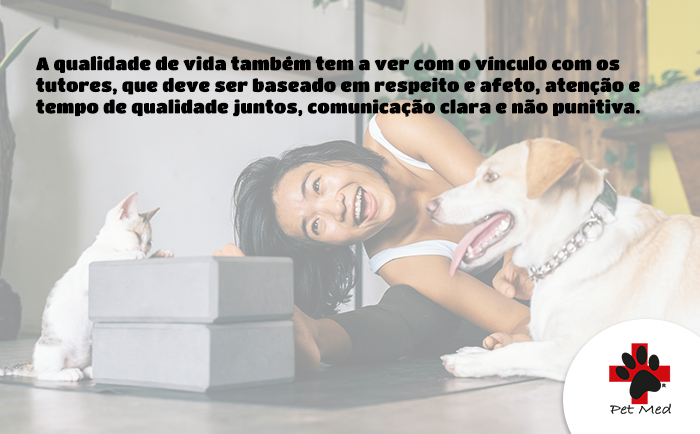
Quality of life also depends on the bond with caregivers, which should be based on respect and affection, attention and quality time together, and clear, non-punitive communication.
All of these aspects influence the health and quality of life of animals.
Pet Med – And how does physical activity contribute to the quality of life of dogs and cats?
Marcela Squillaro Rubo Spadoni – Physical activity greatly contributes to the quality of life of animals, as it improves physical health through weight reduction, muscle and joint strengthening, as well as improving heart and lung function. It also helps prevent diseases, reducing the risk of obesity, diabetes, joint and cardiovascular problems.
Physical activity also acts as a mental stimulus when pets go for walks, play, and experience new smells. All these experiences help prevent stress, anxiety, and destructive behaviors, and as a result, we see an increase in longevity, since they live better and longer lives, maintaining a healthy body and mind.
Pet Med – What are the most important benefits of regular physical activity for the health of animals?
Marcela Squillaro Rubo Spadoni – Daily physical activity brings several important benefits to animals. In addition to those mentioned above, we can highlight weight control, which helps prevent obesity, which can cause diabetes, heart and joint problems. It also strengthens muscles and bones, keeping them strong, especially important in older animals. Physical activity improves circulation and the cardiovascular system, increasing endurance and improving heart function, as well as stimulating the digestive system and helping to prevent problems such as constipation.
In the emotional realm, physical activity helps reduce stress, anxiety, and boredom, especially in dogs and cats that spend a lot of time alone. It also improves socialization, helping animals become more sociable and confident with other animals and humans.
In short, active animals live longer and with a better quality of life.
Pet Med – Do dogs and cats have different needs in terms of physical exercise?
Marcela Squillaro Rubo Spadoni – Yes, dogs and cats have very different needs.
Dogs are social animals, accustomed to living in groups and moving around a lot, therefore they need regular physical and mental stimulation for about 30 minutes to 2 hours. This variable will depend on the breed, age and health, but, in general, healthy dogs tend to enjoy walks, runs, games of fetch, agility and trails.
Cats, on the other hand, are more independent, solitary predators with short bursts of energy, being most active at dawn and dusk. Their exercise needs vary from 10 to 20 minutes several times a day. They usually enjoy games that mimic hunting, with feather wands, laser pointers, toy mice, climbing shelves or scratching posts, and also hiding treats.
Pet Med – Is there a minimum recommended amount of daily exercise for dogs and cats?
Marcela Squillaro Rubo Spadoni – The ideal type of physical activity varies according to the dog's breed, age, size, and energy level. I will cite some examples according to age range and breed group:
Puppies (up to 1 year):
Short, light, and frequent exercises, avoiding impact on joints that are still growing;
Playtime with soft toys, short runs, socialization with other dogs and people. This can include activities like hunting for treats, hiding them around the house or yard; basic commands with positive reinforcement; and light walks, as long as they are short and controlled.
Adults (1 to 7 years):
Here the dogs are at their most energetic and need more stimulation.
Active and athletic dogs (Border Collie, German Shepherd, Labrador, Husky)
• Long walks
• Running, hiking, swimming
• Agility, frisbee, ball fetch, scent games
Medium-sized/calm dogs (Bulldog, Shih Tzu, Basset)
• Moderate walks
• Light play in the backyard or at home
• Enrichment with interactive toys
Small/energetic dogs (Poodle, Jack Russell, Spitz)
• Short and frequent walks
• Games with low obstacles
• Games with treats and hunting toys
Senior dogs (from 7 to 9 years old, depending on the breed):
At this stage of life, activities should be calmer and low-impact, always focusing on maintaining mobility and mental health. Short, regular walks, swimming (if the dog enjoys it), and mental stimulation with strategy toys or simple commands are excellent ways to maintain physical activity for seniors.
Extra tips by dog type:
• Working breeds (Border, Shepherd, Doberman): require tasks such as training, scent work, and advanced obedience.
• Companion dogs (Lhasa Apso, Maltese, Chihuahua): prefer human interaction, short games, and enrichment at home.
• Brachycephalic dogs (Pug, Bulldog): be careful with heat and exertion; activities should be done carefully and preferably during cooler times of day, for short durations, and with breaks.
Pet Med – What are the health risks for dogs when they don't get daily physical activity?
Marcela Squillaro Rubo Spadoni – Dogs that do not get daily physical activity are at various health risk, both physically and mentally.
They can become obese because, without activity, the dog consumes more calories than it expends, leading to fat accumulation and, consequently, obesity. This can cause other problems such as diabetes, respiratory difficulties, and cardiovascular diseases. It is important to emphasize that dogs that do not exercise have a higher risk of developing heart and circulatory problems.
Sedentary dogs can also develop joint and muscle problems, having a greater tendency to suffer from muscle atrophy, joint stiffness, and aggravated dysplasias, such as hip or elbow dysplasia.
In addition to physical problems, lack of physical activity can also lead to behavioral problems such as anxiety, aggression, destruction of objects, excessive barking, and depression. Not to mention premature aging, as lack of exercise can accelerate a dog's aging process, reducing its quality and life expectancy.
Pet Med – And what about cats?
Marcela Squillaro Rubo Spadoni – Lack of physical activity in cats can also lead to a number of health and behavioral problems. One of the most common risks is a sedentary lifestyle, which makes cats more prone to weight gain, which can trigger other diseases such as Diabetes Mellitus, type 2 diabetes in cats.
Just like in dogs, a sedentary lifestyle contributes to stiffness and pain in the joints, especially in older cats. Lack of exercise can also weaken the heart and affect circulation. It's worth noting that cats need mental and physical stimulation, and therefore, inactivity can lead to boredom, anxiety, and even depression.
When bored and lacking energy, cats can develop behaviors that humans find undesirable, such as scratching furniture, aggression, or excessive meowing.
Furthermore, a sedentary lifestyle can lead to digestive problems in cats, such as constipation, since daily movement helps the digestive system.
Pet Med – How can family members tell if their pets are getting enough physical activity?
Marcela Squillaro Rubo Spadoni – Determining if your pet is getting enough exercise involves observing their behavior, body, and overall health. Here are some signs to help you assess this:
Energy level
• Sufficient: He seems relaxed and calm at home, but excited during walks or playtime.
• Lack of exercise: Becomes restless, hyperactive, barks excessively, or destroys objects.
• Over-exercise: Appears exhausted, reluctant to move, limping, or sleeping excessively.
Body condition
• Good: You can easily feel his ribs, but without seeing them, and he has a visible "waist".
• Lack of exercise: Overweight, difficulty getting up, shortness of breath easily.
• Excess: Loss of muscle mass or excessive weight loss.
Behavior
• Well-balanced: Interacts well with people and other animals, does not exhibit destructive behaviors.
• Lack of exercise: Shows boredom, anxiety, barks or meows for no reason, bites objects.
• Excess: May become irritable, avoid playfulness, or appear sore.
Sleep and rest
• Normal: Sleeps well, but is active during the day.
• Lack of exercise: May sleep a lot out of boredom, but still seem "restless".
• Excess: Sleeps excessively due to exhaustion, appears sluggish or apathetic.
General health
• Well-exercised: Has a good appetite, normal stools, and stable breathing and heart rate.
• Too little or too much exercise: May cause digestive or respiratory problems.
Pet Med – For cases where dogs have some type of mobility problem, how can the use of supports that help reduce impacts on injuries or joints help maintain a regular physical activity routine, providing better quality of life and longevity for the animals?
Marcela Squillaro Rubo Spadoni – The use of supports can be beneficial for the quality of life of animals with mobility problems, especially during physical activity. Supports, such as Pet Med's limb protectors, help reduce the impact on joints, providing support and keeping the animal active safely. It is very important that this support is of good quality and evaluated by a veterinary physiatrist or orthopedist. They can reduce overload on other limbs, aid in the rehabilitation process, and allow for safer movement.
Other strategies that complement the supports include water exercises, such as hydrotherapy, as it involves low-impact movement. The use of non-slip mats at home, which prevents slips and falls, as well as ramps or low stairs to facilitate access to sofas, beds, or cars, and, as mentioned, short and frequent activity sessions.
Pet Med – And what about cases where animals are timid and don't feel comfortable going for walks outside?
Marcela Squillaro Rubo Spadoni – Many animals are afraid to go for walks outside. These animals can greatly benefit from using products like the Calm Pet vest from Pet Med, a line of natural calming products that help reduce anxiety, stress, and reactivity in challenging situations, such as walks.
Calm Pet can help reduce anticipatory anxiety, exaggerated reactions to stimuli, and make learning easier by keeping pets calmer. Ideally, Calm Pet should be used in conjunction with the walking routine, putting the vest on the animal about 20 to 30 minutes before the walk.
Pet Med – Finally, how can and should families incorporate physical activity into the daily routine of their dogs and cats?
Marcela Squillaro Rubo Spadoni – Incorporating physical activity into the routine of dogs and cats is a simple and effective task.
For dogs
Families should incorporate walks into their morning or evening routine, which can include playing ball, hide-and-seek, making tunnels and obstacles with cushions and boxes, practicing commands, doing family activities, and taking the dog along. Hire dog walkers Dog daycares are good options for families with limited time.
It's important to emphasize that for dogs living in houses with yards, the extra space is an advantage, but having a yard doesn't replace the need for structured exercise and daily interaction. Many family members think that "just by having space," the dog is already exercising, but in reality, many dogs just lie around, bored, or walk very little if they aren't stimulated.
For these cases, here are some recommendations:
1. Active play in the backyard
• Playing ball, frisbee or pull toys
• “Hide-and-seek” with treats or toys
• Short runs with you or between improvised obstacles
2. Physical and mental enrichment
• Create obstacle courses using cones, tunnels that can be made from boxes, and ramps.
• Hide treats around the yard or use stuffed “Kong” type toys.
• Alternate toys to prevent him from getting bored.
3. Daily training
• Short training sessions on commands such as sit, give paw, fetch, etc…
• This expends mental energy and strengthens the bond with you.
4. Outdoor walks
Even with a yard, taking the dog for a walk outside is important:
• It stimulates the mind with new smells, sounds, and interactions.
• Helps with socialization with people and other dogs.
• It reduces boredom and behavioral problems.
5. Interaction with other dogs
• If possible, encourage playdates with neighboring dogs, but always under supervision. Remember that socialization is a form of physical and mental exercise.
For cats
Indoor cats also need daily physical activity. Their natural behaviors should be encouraged: hunting, exploring, climbing, observing, and playing. Here are some recommended physical activities:
1. Simulated hunting games
• Wands with feathers, ribbons, or string toys that simulate moving prey.
• Laser light: great for stimulating the hunting instinct, but always finish with a physical toy for him to "catch".
• Mice and toys that move on their own also work well.
2. Environmental enrichment
• Tall scratching posts, towers, or shelves so that cats can climb, jump, and observe.
• Elevated walkways and wall shelves help with vertical exploration.
• Hide treats around the house or in interactive toys (like a cat "Kong") to stimulate their mind and sense of smell.
3. Walks with a harness: If the cat is sociable and adapted from kittenhood, walks on a leash in safe places (such as building hallways or screened balconies) can be a light form of exercise.
4. Boxes, bags and tunnels
• Cats love to explore hiding places.
• Fabric tunnels, cardboard boxes, or even paper bags (without handles) encourage movement.
5. Training with commands
• Teaching simple commands like "sit," "come," and "give paw" with treats is great for both body and brain.


