Put Pauline Machado
Silent heart disease in dogs and cats is more common than many family members realize, and in most cases, it progresses without showing obvious signs until the condition is in an advanced stage.
These changes in the heart can remain "hidden" for months or years, only being discovered during routine checkups or in the presence of nonspecific clinical signs, such as easy fatigue, occasional coughing, or difficulty keeping up with usual activities. Therefore, just as in our lives, prevention and early diagnosis are fundamental to ensuring a better quality of life and longevity for pets.
In this interview, the Veterinary Doctor, Cláudia Patrícia Annuseck , who has specialized in Veterinary Cardiology since 2012 at Anclivepa São Paulo, discusses how to identify subtle signs that may indicate silent heart disease in dogs and cats, which tests aid in early diagnosis, and what the main therapeutic approaches available are.
During our chat, the Veterinarian also spoke about the importance of regular check-ups and preventive measures, showing how early intervention can completely change the prognosis for these patients.
Watch the interview and share it with your friends and family!

Pet Med – What are silent heart diseases in dogs and cats?
Claudia Patricia Annuseck – Any heart disease that can affect dogs and cats may be silent in its early stages, only showing clinical signs after considerable progression of the disease.
However, we have observed that dogs affected by arrhythmogenic right ventricular cardiomyopathy, such as Boxers and Boxer mixes, for example, may have sudden death as their only symptom.
Why do they often go unnoticed until more advanced stages?
Claudia Patricia Annuseck – Generally, the initial clinical signs may be subtle and considered a normal part of aging in pets. Many family members believe that a decrease in their pet's activity level is normal for their age, not considering that it could be a sign of heart disease.
Pet Med – What are the subtlest clinical signs that may indicate heart problems, even in seemingly healthy animals?
Claudia Patricia Annuseck – More subtle clinical signs may include reduced activity with less willingness to walk, more time spent resting, coughing, and easier fatigue.
Pet Med – Which breeds or age groups are more predisposed to developing heart disease without obvious symptoms?
Claudia Patricia Annuseck – Some breeds, such as the Cavalier King Charles Spaniel, have a genetic predisposition to mitral valve disease, and in many cases, these dogs are born with valvular abnormalities.
Small breeds such as Poodles, Chihuahuas, Pinschers, Spitz, Lhasa Apsos, and Shih Tzus are also more predisposed to degenerative valvular disease, and we have noticed that many of these dogs begin to show changes in tests from the age of six, without, however, demonstrating clinical signs.
However, we must remember that it is not only purebred dogs and cats that suffer from heart disease. Our beloved mixed-breed pets can also present with the same conditions.
On the other hand, large to giant breed dogs like Great Danes and Dobermans have a greater predisposition to changes in the heart muscle, called dilated cardiomyopathy, which is also usually more noticeable from the age of six, but can go through a latent phase before that.
We must also not forget about arrhythmogenic heart diseases (such as those in Boxers) and others that can affect dogs and even cats.
Cats, however, can undergo gene mutations throughout their lives and develop hypertrophic cardiomyopathy, which is widely studied in Maine Coons, but is not limited to this breed.
It's also worth remembering congenital heart disease, when pets are born with a heart anomaly.
Pet Med – Are there behavioral signs that pet owners can observe on a daily basis that may be linked to heart problems?
Claudia Patricia Annuseck – Yes, among these symptoms we can observe decreased activity levels, coughing, bluish mucous membranes, rapid breathing, increased abdominal volume, fainting, and paralysis of hind limbs, similar to cats with advanced cardiomyopathy and thrombosis.
In our daily practice, we observe that we must pay attention to the diet of these patients, who often present with decreased appetite – an ideal caloric intake is important. Care such as avoiding stress and controlling activity levels are also part of the therapy.
Pet Med – What is the importance of early diagnosis for effective treatment and a good quality of life for the pet?
Claudia Patricia Annuseck – Today it is known that asymptomatic heart patients who meet certain criteria can benefit from therapies even before presenting symptoms of heart disease, such as dogs with degenerative mitral valve disease, which should be treated from the stage we call "advanced B2," where they do not yet show clinical signs, with the possibility of delaying these signs for up to 18 months.
Pet Med – Why is it important to perform preventive cardiac exams even when the pet shows no symptoms?
Claudia Patricia Annuseck – Cardiologic exams are essential for diagnosing early changes in both the heart's structure and heart rhythm. This allows for monitoring and, often, even treatment before the pet shows clinical signs, contributing in many cases to preventing serious signs of heart disease for a certain period of time.
Echocardiography, for example, assesses the heart's structure—muscle and valve apparatus—allowing us to check for structural changes in heart valves, heart diameters, and the strength of the heart's contraction. Through it, we can evaluate the impact of these changes on the size and function of the heart, in order to decide the best time to start treatment.
The electrocardiogram, in turn, assesses the heart rhythm and electrical conduction through the heart muscle, and is essential for diagnosing arrhythmias, which can often have a fatal outcome.
These two exams complement each other and are crucial for a good cardiological evaluation, guiding both the treatment and monitoring of heart disease.
Pet Med – Finally, how can stress worsen a heart condition in pets, especially during examinations or hospitalizations?
Claudia Patricia Annuseck – Stress stimulates what we call the sympathetic nervous system, altering heart rate (tachycardia) and raising systemic blood pressure, which impairs a good assessment and often compromises the technical quality of the examination when the patient vocalizes or becomes tachypneic.
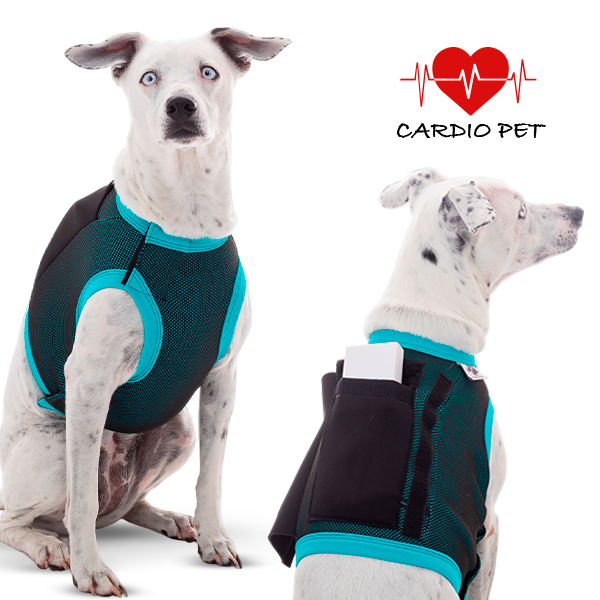
For example, when performing a Holter monitor exam, we must provide comfort for the patient and safety for the equipment, as well as minimize the possibility of complications during the recording. This is achieved by using an appropriate vest such as the Pet Med Cardio Pet – indicated for all cases where a Holter monitor exam is necessary, allowing the pet to continue its normal routine and reducing complications during the recording.
Your pet's heart deserves the same attention as yours. Prevention is key to a long and healthy life, especially when dealing with silent heart conditions.
To assist in this preventative care and the comfort of the animals, the Pet Med develops accessories that make a difference, such as Pet Cardio Vest Ideal for examinations and monitoring.
Visit our website and explore our complete product line that combines technology and well-being for your best friend. Follow us on Instagram Join our community of animal care and love!