

By Pauline Machado
July is the month dedicated to raising awareness and preventing head and neck cancer, through the nationally recognized Green July Campaign, which alerts the population about the risks, early signs, and importance of rapid diagnosis of these neoplasms.
The campaign also extends to the veterinary world as an important warning about the prevention and early diagnosis of head and neck cancer in dogs and cats.
Tumors in this region, such as those of the oral cavity, jaw, tongue, salivary glands, larynx, or thyroid, are not uncommon in pets—especially older animals—and are often silent in their early stages. Therefore, paying attention to subtle signs is crucial to ensure a quick and effective response to treatment.
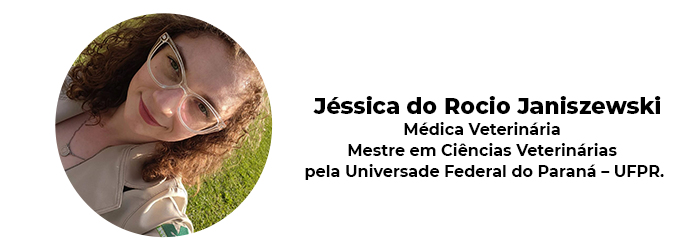
To discuss this topic with us, we invited the Veterinary Doctor, Jéssica do Rocio Janiszewski , Master in Veterinary Sciences from the Federal University of Paraná – UFPR.
Dr. Jéssica also holds a Residency in Large Animal Medical and Surgical Clinic and a Residency in Veterinary Oncology, both from UFPR (Federal University of Paraná).
This interview is a must-read. After you've finished reading, please share it with friends and family.
Pet Med – What is the Green July Campaign and why is it so important to talk about head and neck cancer?
Jessica do Rocio Janiszewski – Green July is an initiative that seeks to raise awareness about early detection and prevention of neoplasms in the head and neck region. It is important to talk about this disease and about early detection to increase the chances of treatment and cure before the tumor progresses to the point of becoming unresectable. Furthermore, this region contains important structures, such as airways, eyes, and the central nervous system, which, when compromised by the disease or compressed by tumors, can lead to serious complications for the patient's life.
Pet Med – What are the main risk factors and warning signs for cancer in this region?
Jessica do Rocio Janiszewski – In my opinion, the main risk factors for pets are age and chronic sun exposure, which can predispose them to skin cancer. Among other warning signs we should pay attention to are several, I would highlight increased swelling, difficulty eating, bad breath, and spots on the skin.
especially in the ears, eyes that appear to be protruding from their sockets more than normal, breathing difficulties and pain.
Pet Med – How can prevention be done on a daily basis, especially regarding oral hygiene, diet, and lifestyle habits?
Jessica do Rocio Janiszewski – It is important to pay attention to our pets, always being aware of facial and eye symmetry, frequently brushing their teeth with good quality veterinary products, as well as offering good quality food with no added or low levels of preservatives, protecting them from the sun, avoiding walks during the hottest hours of the day and always using sunscreen on the most sensitive areas.
Pet Med – During cancer treatment, how can we ensure a more humane and less painful care routine for the patient?
Jessica do Rocio Janiszewski – During cancer treatment, as a veterinarian, I always strive to provide a calm and comfortable environment for my patients, both during follow-up appointments and chemotherapy sessions and hospitalizations. It's reassuring to see that my patients like me and feel good when they see me. I try to reward them every time I draw blood or administer medication. I instruct family members about the main...
Risks of treatment, expected effects and how to proceed, in addition to maintaining a comfortable environment surrounded by love and affection.
Pet Med – We know that nutrition can be a challenge in this type of cancer. What precautions should be taken to ensure good nutrition without aggravating local discomfort?
Jessica do Rocio Janiszewski – In cases of oral neoplasms or in regions that make chewing difficult, such as the temporomandibular joint, the use of softer or liquid food is suggested, and there is also the possibility of using esophageal tubes to assist in feeding.
Pet Med – The head and neck area is delicate, with scars, tubes, dressings, and sensitive stitches. How can handling be more hygienic and safe in these cases, both at home and in clinics or hospitals?
Jessica do Rocio Janiszewski – For wound care and catheter management, the aim is always to use new materials, preferably sterile, along with antiseptics for cleaning, and, in cases of oral neoplasms, oral antiseptics.
For esophageal probes, there are special collars that allow for better fixation of dressings and the probe, such as the Protective Collar for Cat Probes, developed by Pet Med.
Pet Med – Treatment is often prolonged and exhausting. How do the use of accessories and a welcoming environment help with adherence and well-being?
emotional?
Jessica do Rocio Janiszewski – The use of certain accessories allows for the maintenance and upkeep of quality of life. The use of an esophageal feeding tube, for example, helps keep the patient nourished, increasing life expectancy. Furthermore, certain necessary management practices bring the caregiver and patient closer together; affection and attention are fundamental to treatment.
Pet Med – In patients presenting with pain, limited movement, or hypersensitivity in the cervical region, how do accessories such as a cervical collar, the Calm Pet vest, or a muzzle assist in safe handling without compromising the animal's dignity and comfort?
Jessica do Rocio Janiszewski – In cases of pain or limited movement, a collar and vest can help improve the patient's comfort. A muzzle, on the other hand, can be used in more specific situations where there is a risk to the person handling the patient, who may bite due to pain, but it is more uncomfortable.
Pet Med – During the treatment of head and neck neoplasms, what precautions should be taken regarding the fixation of the esophageal tube, and how can the appropriate collar facilitate local hygiene and daily management by the owner?
Jessica do Rocio Janiszewski – The esophageal tube needs to be securely fixed, because if any change in position occurs, aspiration of food contents may happen.
Regarding the dressing, it is important that it be changed daily, with careful cleaning of the catheter insertion site, as it is a wound and is located in an area prone to infection because it has direct contact with the digestive tract. The use of
Special collars for the catheter facilitate dressing maintenance, keeping it in place, securing the catheter, and providing a more aesthetically pleasing and comfortable appearance.
Pet Med – How can family members and caregivers be guided to actively participate in these care practices without causing pain or discomfort to the patient?
Jessica do Rocio Janiszewski – Those closest to the patient, who will be present to provide care, should be instructed by the veterinarian; there may even be groups on communication apps for sharing updates. In addition, charts can be created to manage medications and feeding when more than one person at home will be caring for the animal.
Pet Med – Finally, for those facing this diagnosis, what are the main guidelines and support options during Green July?
Jessica do Rocio Janiszewski – My advice to anyone going through this situation with their pet is always to seek a specialist for treatment and guidance, do everything within your reach, and give lots of love and affection.
Another very important point is to consider the suffering involved. There are situations where the cancer is very aggressive and the treatment is ineffective. In these cases, it is necessary to talk to the owner about prognosis and quality of life, although this is a conversation we never like to have…
A cancer diagnosis can be challenging, but with the right prevention and support, it's possible to give your pet a better quality of life and more comfort. Pet Med is dedicated to creating solutions that make a difference in the recovery and daily well-being of animals. .
Visit our website to see our full product line. Pet Med and follow us on Instagram For health tips, news, and information that will help you care for your best friend with all the love and dignity they deserve. Together, we make a difference!


