

Put Pauline Machado
When we talk about the environment, we commonly think of rivers, forests, urban waste, and industrial emissions. However, an element often neglected in this equation is the uncontrolled presence of abandoned dogs and cats. These animals, when overpopulated in cities and rural areas, generate silent but significant impacts on environmental balance, biodiversity, soil and water quality, and contribute to the spread of diseases.
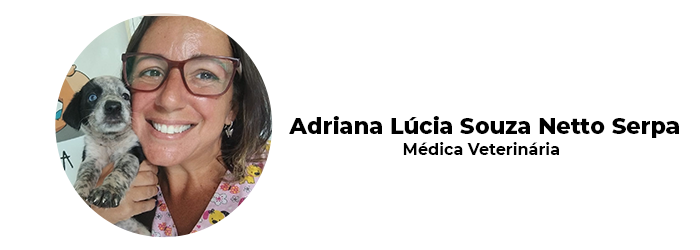
In this special interview for Environment Month, the Veterinarian, Adriana Lúcia Souza Netto Serpa It raises important reflections on how animal abandonment is not only a social or public health issue, but also an ecological challenge.
Adriana holds a postgraduate degree in advanced small animal clinical medicine and works in the area of Collective Veterinary Medicine at SUIPA – Sociedade União Internacional Protetora dos Animais (International Union for the Protection of Animals Society), in Rio de Janeiro, and also provides home visits focusing on preventive medicine.
She is also a member of the Commission of Veterinary Doctors from NGOs of CRMV-RJ and Secretary Director of Anclivepa-RJ, as well as administrative manager of postgraduate courses at Anclivepa RJ.
During the conversation, the Veterinarian emphasizes how the increase in zoonotic diseases, environmental degradation caused by waste, predation of wildlife, and overburdened shelters all contribute to a multidisciplinary approach and joint actions between pet owners, health professionals, public authorities, and civil society.
Watch the interview and share it with your friends and family!
Pet Med – When we think about the environment, we usually think of trees, rivers, and urban waste, but what about pets? Are they also part of this conversation?
Adriana Lúcia Souza Netto Serpa – Yes, pets are included in and directly impact this context, whether from the industrial production of their food and care products, as well as their waste, especially when we talk about stray animals.
Pet Med – How does the overpopulation of abandoned dogs and cats directly affect the environmental balance in cities and rural areas?
Adriana Lúcia Souza Netto Serpa – The overpopulation of abandoned animals directly affects the fauna, flora, and public health. The animals become competitive for space and food, their droppings pollute the soil and water, increasing the risk of disease in the local population.
Pet Med – Could the uncontrolled presence of these animals impact the local wildlife? If so, what types of ecological conflicts could this generate?
Adriana Lúcia Souza Netto Serpa – Yes, an accelerated increase in abandoned animals can directly impact wildlife through predation, reducing the population of some species, competing for and diminishing resources such as food, water, and space with local fauna, directly interfering with their well-being, as well as spreading diseases, causing an environmental imbalance.
Pet Med – Does excess feces, urine, and carcasses in public areas represent an environmental problem, affecting soil and water, for example?
Adriana Lúcia Souza Netto Serpa – The increase in organic matter produced by abandoned animals represents a serious environmental problem, negatively impacting soil and water, increasing contamination by pathogens, reducing fertility and increasing soil degradation, reducing water quality, and increasing the risk of disease for the population.
Pet Med – Abandoned animals can transmit zoonotic diseases. How does this risk connect to environmental and public health?
Adriana Lúcia Souza Netto Serpa – Environmental and public health are directly interconnected, and the presence of abandoned animals represents a risk to both, whether through the transmission of zoonotic diseases such as rabies, leptospirosis, and leishmaniasis, or through imbalances in the entire ecosystem.
Pet Med – Do overcrowded and inadequate shelters have any ecological impact, such as waste production or excessive use of resources?
Adriana Lúcia Souza Netto Serpa – The main impact of overcrowded and inadequate shelters is related to public and environmental health, also affecting the health and well-being of the sheltered animals themselves. Proper management is crucial for the correct disposal of waste produced, minimizing risks, as well as an infrastructure that avoids the excessive use of resources.
Pet Med – Can the improper disposal of pet food, veterinary medicines, and animal waste also harm the environment?
Adriana Lúcia Souza Netto Serpa – Yes, they can cause serious environmental damage as well as risks to human health and other animals, especially those that come into contact with them. The disposal of food, medicines, and waste must strictly follow the current legislation for this purpose.
Pet Med – What is the role of neutering and responsible population control as a tool for environmental preservation?
Adriana Lúcia Souza Netto Serpa – Raising public awareness about the importance of spaying and neutering prevents uncontrolled population growth, reducing the number of abandoned animals and thus contributing to protecting and ensuring the balance of the environment and, consequently, public health.
Pet Med – Can adoption campaigns, responsible pet ownership, and environmental education help reduce this impact? If so, how?
Adriana Lúcia Souza Netto Serpa – Yes, adoption campaigns promoting responsible pet ownership and environmental education are great tools to reduce these environmental impacts. Overcrowded shelters are not the solution; the intention of a shelter is only a temporary stay, a temporary home, and it cannot be seen as a sanctuary where animals enter and never leave.
Pet Med – Finally, what is your opinion on viewing the abandonment of dogs and cats as solely a social or public health problem, and not an environmental one?
Adriana Lúcia Souza Netto Serpa – Animal abandonment is a highly complex problem that involves not only social and public health issues, but also environmental concerns. An abandoned animal directly impacts its environment through predation, soil and water contamination, transmission of zoonotic diseases, and loss of biodiversity, causing significant ecological imbalance.


