

Put Pauline Machado
Glaucoma is one of the most silent and dangerous eye diseases that also affects the vision of dogs and cats, and can lead to irreversible blindness if not identified and treated in time.
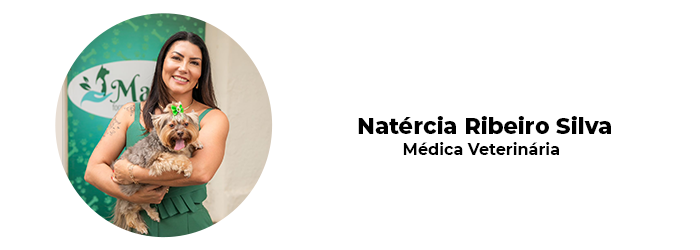
Although more common in certain breeds and ages, glaucoma can appear suddenly or secondary to other conditions, such as uveitis or lens luxation. Therefore, in today's interview, we will understand how family members can recognize early clinical signs in their daily lives. The Veterinarian, Natércia Ribeiro Silva, specialized in Ophthalmology and founder of Majstra Veterinary Formulations also explains which tests are essential for diagnosis and the treatment options available — from eye drops to surgical interventions, always focusing on preserving the vision and quality of life of animals.
Watch the interview and share it with your friends and family!
Enjoy your reading.
Pet Med – What exactly is glaucoma and why does it pose such a great risk to the vision of dogs and cats?
Natércia Ribeiro Silva – Glaucoma is an increase in intraocular pressure due to the failure of aqueous humor – the fluid that fills the anterior part of the eye – to drain properly. This increase leads to gradual and irreversible vision loss, as it causes the loss of retinal cells and degeneration of the optic nerve due to pressure on these tissues. It is one of the leading causes of blindness in dogs.
Pet Med – What are the main types of glaucoma that affect dogs and cats, and how do they develop?
Natércia Ribeiro Silva – We classify glaucoma into three forms:
1 – Glaucoma can be primary or secondary, depending on its cause;
2 – Acute or chronic based on its evolution;
3 – With an open or closed angle, depending on the appearance of the drainage angle.
So we can have:
Primary glaucoma with elevated intraocular pressure (IOP) not associated with other diseases. It is hereditary and usually bilateral.
Primary open-angle glaucoma, due to metabolic changes in trabecular cells.
Primary angle-closure glaucoma with mechanical changes in the drainage angle.
Secondary glaucoma, associated with a pre-existing eye disease that obstructs the drainage channel of aqueous humor, is usually unilateral, but can be bilateral.
Pet Med – What clinical signs should raise an alert that an animal may be developing glaucoma?
Natércia Ribeiro Silva – Symptoms include: redness of the whites of the eyes, excessive blinking, a bluish tint to the eyes, dilated pupils, vision loss, and, in chronic cases, enlargement of the eyeball.
Pet Med – Are the symptoms of glaucoma always visible, or can the disease progress silently?
Natércia Ribeiro Silva – It's a silent disease, but as it worsens, the signs begin to appear.
Pet Med – Are there any known breed or genetic predispositions in dogs and cats?
Natércia Ribeiro Silva – Yes, the dog breeds predisposed to primary glaucoma are:
Akita, Basset Hound, Beagle, Border Collie, Chihuahua, Cocker, Dachshund, Maltese, Pinscher, Poodle, Shih Tzu and Schnauzer.
Females have a greater chance of developing it due to having a smaller iridocorneal angle.
Pet Med – How is glaucoma diagnosed in veterinary practice, and what tests are essential?
Natércia Ribeiro Silva – The diagnosis is made with specific equipment that measures the intraocular pressure of the eye. This equipment is called a tonometer, and it can be either an applanation or rebound tonometer.
Pet Med – What is the role of tonometry and how often should it be performed in at-risk animals?
Natércia Ribeiro Silva – Tonometry is part of the routine ophthalmic evaluation. In predisposed animals or those undergoing controlled treatment, ideally, they should be evaluated every six months.
Pet Med – Once diagnosed, is glaucoma curable or is the goal of treatment only to control it?
Natércia Ribeiro Silva – Glaucoma is a chronic disease that has no cure. The goal is to try to slow the progression to vision loss and relieve the pain and discomfort from increased pressure and possible complications due to enlargement of the eyeball, such as keratitis and corneal ulcers.
Pet Med – What clinical treatment options are currently available and how do they work?
Natércia Ribeiro Silva – Glaucoma treatment will vary depending on the stage of the disease, its cause, and whether vision is present or absent. We begin with clinical treatment using antiglaucoma eye drops to control intraocular pressure, combined with injectable medication in cases of acute glaucoma. Oral neuroprotective medications, or nutraceuticals, may also be added.
The goal would be to decrease the production of aqueous humor and increase its drainage to result in a decrease in intraocular pressure. The main active ingredients used are: Dorzolamide, timolol, latanoprost, mannitol, bimatoprost, and brinzolamide.
Pet Med – In what situations is surgical treatment indicated and what are the most commonly used techniques?
Natércia Ribeiro Silva – For eyes unresponsive to clinical treatment, we can refer patients for treatment with drainage implants, cryosurgery, cytophotocoagulation, gonioimplants, iridencleisis, trabeculectomy, intravitreal chemical ablation, or enucleation.
Pet Med – What are the biggest challenges in managing glaucoma in cats, considering their more reserved behavior?
Natércia Ribeiro Silva – Applying eye drops and the number of times required throughout the day can be stressful for cats. The same can be true for using a protective collar in some cases. Cats that live outdoors may be more likely to injure buphthalmic eyes, meaning eyes that are enlarged in size.
Pet Med – What is the importance of ongoing monitoring and the risks of vision loss in dogs and cats with glaucoma?
Natércia Ribeiro Silva – Animals with glaucoma need frequent monitoring until the pressure is controlled, then monitoring at least every two to three months until the IOP remains stable. After this period, ideally, monitoring should occur every six months. We cannot predict the time it will take for vision loss to occur, only monitor its progression with clinical examinations. We know that vision loss will occur, but we cannot specify the exact period; it will depend on each individual's organism and its reaction to treatment. However, untreated animals progress very rapidly to vision loss.
Pet Med – What is the importance of support devices, such as Pet Med's Calm Pet, in providing a better emotional quality of life for patients who are losing their vision, giving them more security and comfort?
Natércia Ribeiro Silva – If the pet is very restless and prevents the application of eye drops, which could increase eye pressure due to excessive jumping, for example, this may be a valid option. Safety and comfort will depend more on handling, such as not moving furniture, isolating risk areas like stairs and pools, walking with a shorter leash close to the body, and finding a pet to act as a guide dog for the animal that will eventually lose its sight. For acute vision loss, Calm Pet can also help, as can the owner's dedication, which is another very important factor for the success of the treatment. It is not an easy or cheap treatment, so it is important for the owner to talk to their veterinarian about the best treatment strategy that will ensure the best outcome for the pet and its family.


